

I still remember the first time I walked through a supermarket in Tennessee, searching for ingredients that felt like home. Everything was packaged, processed, labeled with promises I didn’t recognize. Where was the fresh olive oil my grandmother drizzled over tomatoes? Where were the simple, whole foods I grew up with in Naples?
That disconnect led me down a path I wish I could undo. Fast food became convenient. Energy drinks replaced afternoon walks. My body felt heavy, my mind foggy. I was living, but I wasn’t thriving.
Then I asked myself a simple question: what is the mediterranean diet I grew up eating, and why did I ever leave it behind?
The answer changed everything. It wasn’t about restrictions or rules. It was about returning to real food, to meals shared with joy, to a way of eating that nourished more than just my body. That return became my mediterranean diet personal journey, and now I’m here to guide you through yours.
If you’ve been wondering what the Mediterranean diet really means and whether it’s right for you, you’re in the perfect place. Let’s explore this together.
Table of Contents
What Is the Mediterranean Diet?
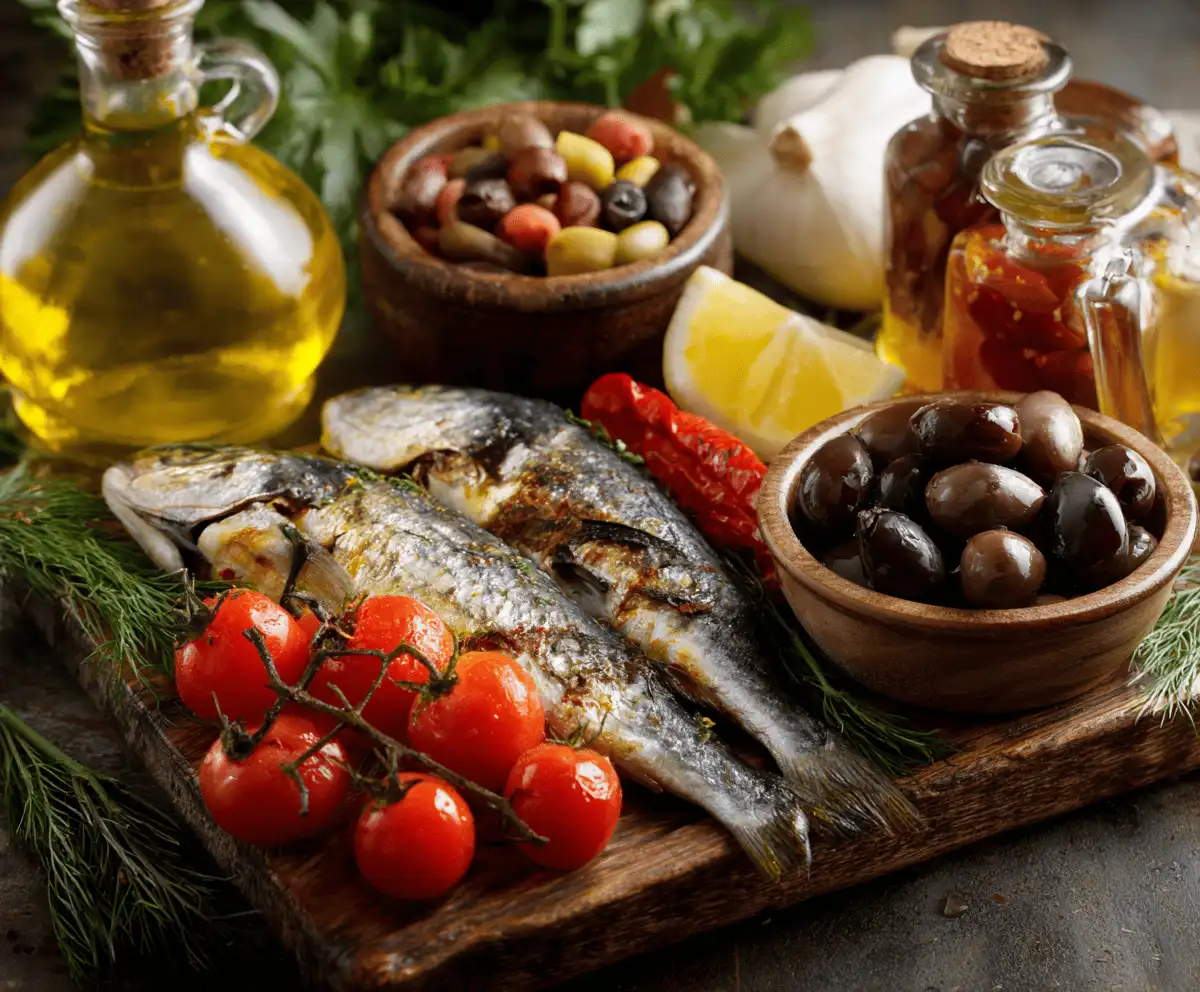
The Mediterranean diet isn’t a diet in the way you might think. There’s no calorie counting, no forbidden foods, no meal replacement shakes. It’s a way of eating inspired by the traditional foods and lifestyle of countries surrounding the Mediterranean Sea, like Greece, Italy, and Spain.
At its heart, this approach celebrates fresh, whole ingredients. Olive oil instead of butter. Fish and seafood over red meat. Colorful vegetables, legumes, whole grains, and fruit filling your plate. It’s plant-forward eating that doesn’t ask you to give up flavor or satisfaction.
Harvard Health describes it as one of the healthiest eating patterns in the world, backed by decades of research showing benefits for heart health, brain function, and longevity. But here’s what makes it truly special: it’s sustainable. You’re not white-knuckling through restrictive meal plans. You’re eating foods that taste incredible and make you feel alive.
When I share my food story and mission, people often say the same thing: “This doesn’t feel like a diet.” Exactly. It feels like coming home to the table, to real ingredients, to meals that matter.
This is eating the way humans have thrived for centuries, not the way modern food marketing tells us to eat.
Core Principles of the Mediterranean Way
Understanding what the Mediterranean diet looks like in daily life comes down to a few simple principles. These aren’t rigid rules. They’re guideposts that help you build meals with confidence and joy.
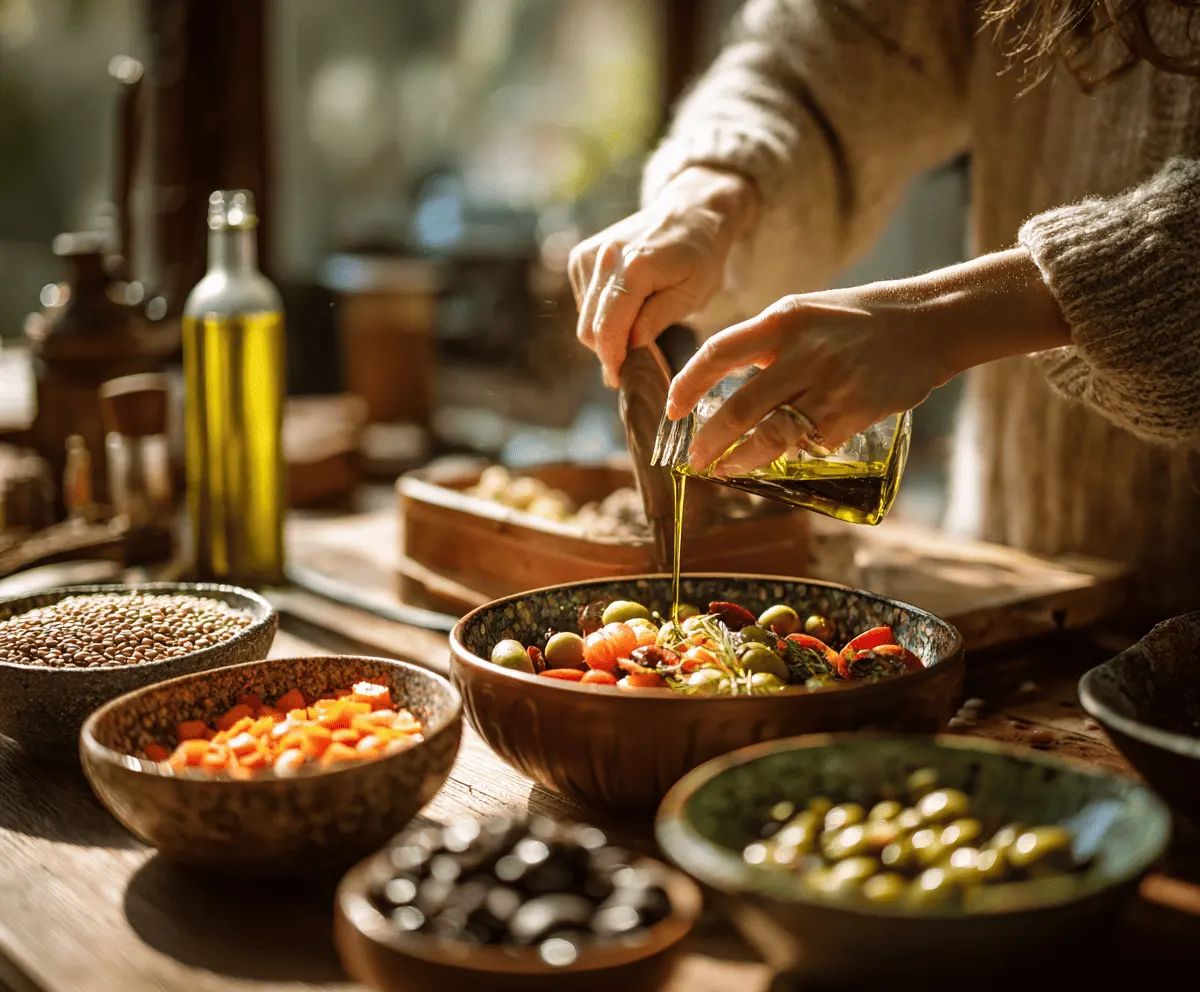
Fresh, Wholesome Ingredients
The foundation is always fresh, minimally processed foods. When I cook now, I think about what my grandmother would recognize. If she’d look at an ingredient label and frown in confusion, it probably doesn’t belong in my kitchen.
Here’s what fills a Mediterranean plate:
- Vegetables and fruits in every color, eaten with every meal
- Whole grains like farro, bulgur, quinoa, and whole wheat bread
- Healthy fats from olive oil, nuts, seeds, and avocados
- Legumes such as chickpeas, lentils, and white beans
- Seafood twice a week, focusing on fatty fish like salmon and sardines
- Herbs and spices for flavor instead of heavy sauces or salt
You’ll notice what’s missing: ultra-processed snacks, sugary drinks, refined grains. Those aren’t banned, they’re just not the stars of your meals anymore.
Balance and Moderation
The Mediterranean way isn’t about perfection. It’s about balance. Yes, you eat plenty of vegetables. You also enjoy a piece of fresh bread dipped in olive oil without guilt.
Meals are meant to be savored, not rushed. Portions are reasonable, not restrictive. And when you want something sweet? Fresh fruit usually does the trick, though a small dessert on special occasions is perfectly fine.
This is where my mediterranean diet food list becomes your best friend. It shows you exactly what to stock in your kitchen so eating well becomes effortless, not stressful.
Pro Tip: Start by adding, not subtracting. Add more vegetables to your lunch. Add olive oil to your cooking. Add fish to your weekly rotation. The processed foods will naturally take up less space on your plate.

Why the Mediterranean Diet Works
There’s a reason this way of eating has survived centuries and earned the attention of researchers worldwide. It’s not trendy. It’s proven. But beyond science, it works because it honors how we’re meant to eat and live.
Nutrient Density and Heart Health
When you fill your plate with Mediterranean foods, you’re getting maximum nutrition in every bite. These aren’t empty calories. They’re packed with vitamins, minerals, fiber, and antioxidants your body actually uses.
The Elliot Hospital highlights how this eating pattern reduces heart disease risk through healthy fats, particularly from olive oil and fatty fish rich in omega-3s. Your cholesterol improves. Blood pressure stabilizes. Inflammation decreases.
Here’s what you’re gaining with each food group:
| Food Category | Key Nutrients | Heart Health Benefit |
| Olive Oil | Monounsaturated fats, polyphenols | Lowers bad cholesterol |
| Fatty Fish | Omega-3 fatty acids | Reduces inflammation |
| Whole Grains | Fiber, B vitamins | Improves blood pressure |
| Legumes | Plant protein, fiber | Stabilizes blood sugar |
| Nuts & Seeds | Healthy fats, magnesium | Supports heart rhythm |
This isn’t about eating less. It’s about eating smarter.
Mindful, Joyful Eating
But here’s where the Mediterranean diet becomes something deeper than nutrition. It’s about how you eat, not just what you eat.
In my grandmother’s kitchen, meals were never rushed. We sat together. We talked. We savored each bite. That practice, that mindfulness, it changes your relationship with food completely.
You eat slower, so you recognize when you’re satisfied. You enjoy your food more, so you don’t feel deprived. You share meals with others, so eating becomes a connection instead of just fuel.
When food brings joy instead of stress, healthy eating stops feeling like work.
The research backs this up too. Studies show that the social and cultural aspects of Mediterranean eating, the slower pace and shared meals, contribute to better mental health and longer life. It’s not just the olive oil. It’s the entire experience.
Quick Fact: People in Mediterranean Blue Zones, where this lifestyle is deeply rooted, live some of the longest, healthiest lives on Earth. Food is medicine, but community and joy are just as healing.
How to Get Started
Ready to bring Mediterranean eating into your kitchen? You don’t need to overhaul everything overnight. Small, intentional changes add up faster than you think.
Simple Swaps You Can Make Today
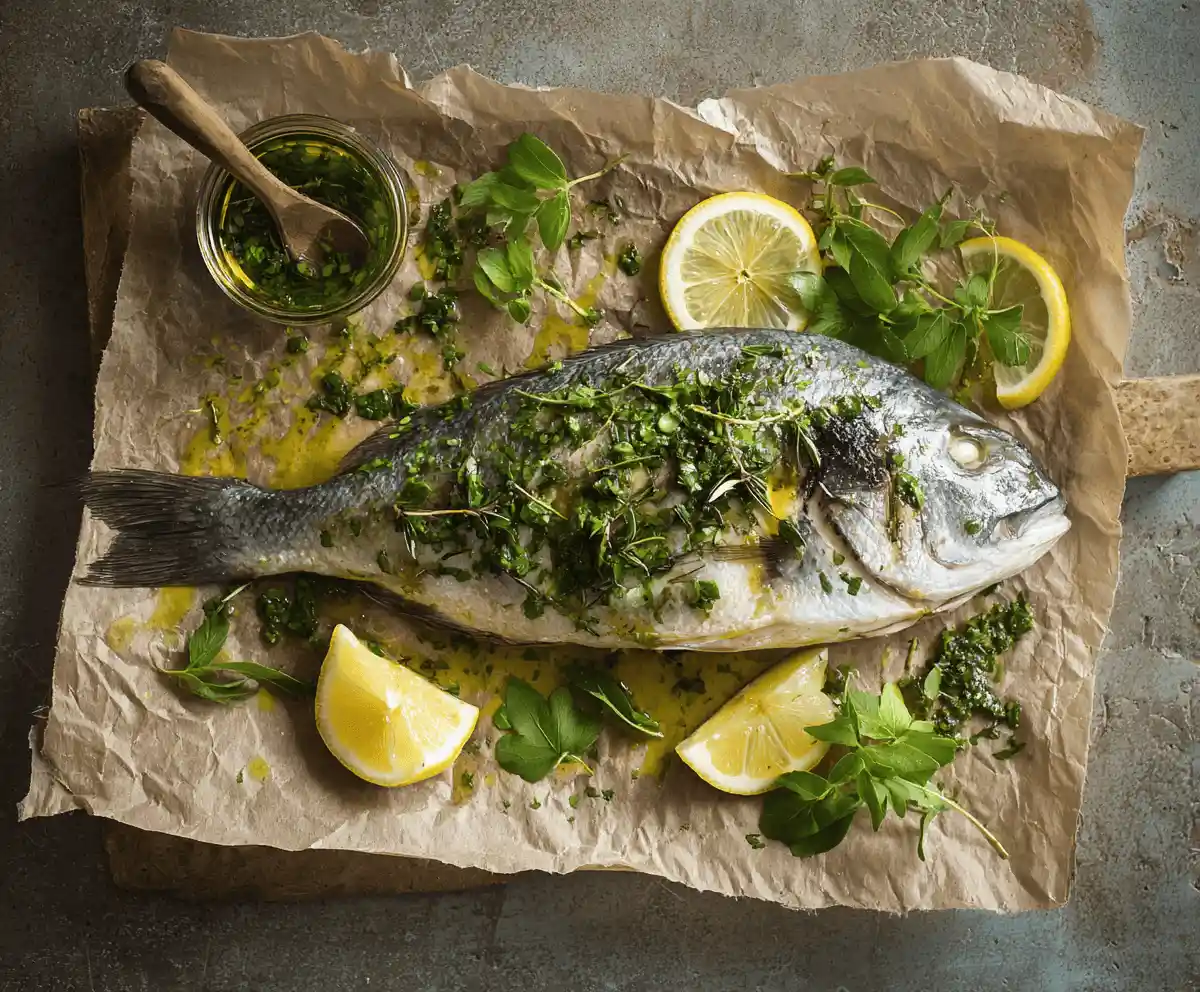
The easiest way to start is by swapping what you already eat for Mediterranean versions. No complicated recipes required. Just better choices that taste incredible.
| Instead of This | Try This Mediterranean Swap |
| Butter for cooking | Extra virgin olive oil |
| White bread | Whole grain or sourdough bread |
| Potato chips | Nuts, olives, or hummus with veggies |
| Beef at every meal | Fish twice a week, legumes often |
| Creamy dressings | Olive oil and lemon juice |
These aren’t sacrifices. They’re upgrades. That first time I drizzled good olive oil over roasted vegetables instead of drowning them in ranch dressing? I couldn’t believe how much flavor I’d been missing.
Start with one swap this week. Just one. Maybe it’s switching to whole grain pasta, or keeping a bowl of fresh fruit on your counter instead of cookies. You’ll be amazed how quickly these small shifts become second nature.
Your 7-Day Beginner’s Plan
If you’re someone who likes structure, I’ve created something just for you. My mediterranean diet meal plan walks you through seven full days of eating, with simple recipes and a shopping list included.
Here’s a peek at what a day might look like:
- Breakfast: Greek yogurt with berries, walnuts, and a drizzle of honey
- Lunch: Lentil soup with whole grain bread and a side salad
- Dinner: Oven-baked salmon with quinoa and roasted vegetables.
- Snack: Apple slices with almond butter
Nothing fancy. Nothing overwhelming. Simple, wholesome food that satisfies your hunger and lifts your mood.
The plan takes the guesswork out so you can focus on enjoying the process. Because this isn’t about perfection, it’s about progress.
The Lasting Benefits of a Mediterranean Lifestyle
When you commit to this way of eating, you’re not just changing your diet. You’re investing in a longer, healthier, more vibrant life. The benefits reach far beyond the dinner table.
Research published by the National Library of Medicine shows that people who follow a Mediterranean eating pattern have lower rates of chronic disease. Heart disease, type 2 diabetes, certain cancers, they all become less likely when you nourish your body with whole, nutrient-rich foods.
But the benefits I notice most aren’t always measurable in a lab. They’re the energy that lasts through the afternoon without needing coffee. The mental clarity that comes from steady blood sugar instead of constant spikes and crashes. The confidence of knowing exactly what’s in my food because I prepared it myself.
Your skin glows. Your sleep improves. Your mood stabilizes. These aren’t promises, they’re patterns I’ve seen in my own life and heard from countless readers who’ve made the shift.
And here’s something beautiful: this way of eating supports healthy aging. The combination of anti-inflammatory foods, heart-healthy fats, and plant-based nutrients protects your brain as you get older. You’re not just adding years to your life. You’re adding life to your years.
If you want to dive deeper into the science behind all of this, I’ve gathered everything in my guide on the health benefits of the mediterranean diet. It’s worth understanding why this works so well.
Real food doesn’t just feed your body. It heals it.
Conclusion: Embrace the Mediterranean Way
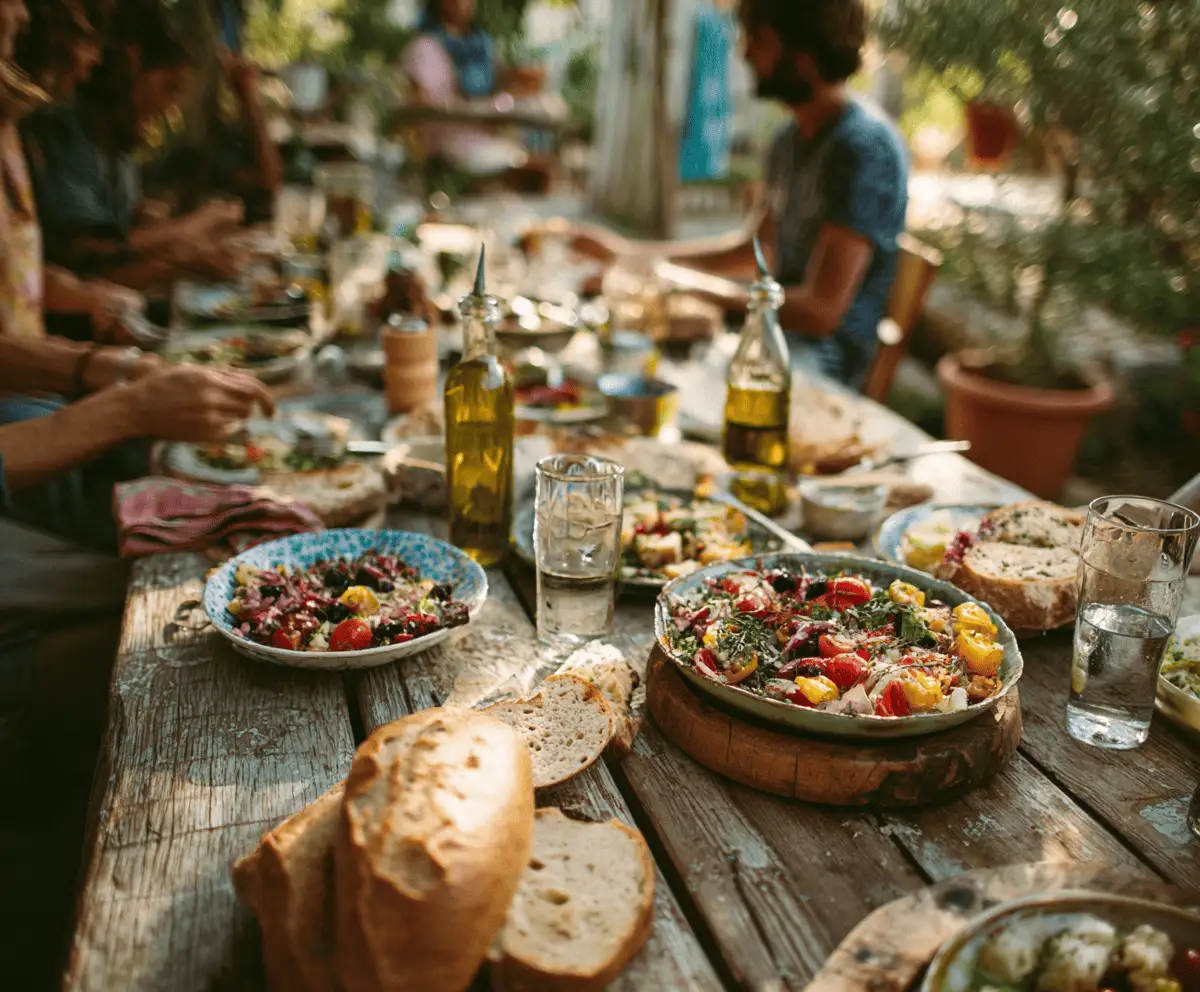
So, what is the Mediterranean diet? It’s not a temporary fix or a restrictive plan you force yourself to follow. It’s a return to eating the way nature intended, with fresh ingredients, joyful meals, and a lifestyle that celebrates nourishment over deprivation.
You don’t need to be perfect. You don’t need fancy ingredients or hours in the kitchen. You just need to start. One swap. One meal. One small step toward feeling better in your body and finding joy at your table again.
This is the path that brought me back to myself. It can do the same for you.
If you’re ready to take that first step, my mediterranean lifestyle guide will walk you through everything you need to build this way of living into your daily routine. Not someday. Today.Start your Mediterranean journey today with my simple 7-day plan!