

I still remember the sound of my grandmother’s wooden spoon hitting the side of her pot. The smell of fresh tomatoes simmering with basil. The way sunlight poured through her kitchen window in Naples, turning everything golden.
That was my childhood. That was the Mediterranean lifestyle guide I didn’t know I was living.
When I moved to Tennessee, everything changed. Fast food replaced family meals. Convenience won over connection. I gained weight, lost energy, and forgot what it felt like to truly savor life.
It took years to realize what I’d lost wasn’t just a diet. It was an entire way of being.
The Mediterranean lifestyle isn’t about perfection. It’s about presence. It’s about eating food that nourishes you, moving your body naturally, and connecting with the people you love. It’s slower morning, longer meals, and finding joy in the smallest moments.
This isn’t a trend or a quick fix. It’s how millions of people in the Mediterranean have lived for centuries. And it’s how I found my way back home, even while living thousands of miles from Naples.
In this roadmap to the Mediterranean lifestyle, I’ll walk you through what this way of living really means. Not just the food (though we’ll talk about that too), but the habits, mindset, and daily rhythms that make the Mediterranean lifestyle one of the healthiest and happiest on earth.
Let’s begin where I did. With one simple question: What if life could feel this good again?
Table of Contents
What Is the Mediterranean Lifestyle?
When most people hear “Mediterranean,” they think olive oil and grilled fish. And yes, food is part of it. But the Mediterranean diet basics are just the beginning.
The Mediterranean lifestyle is how people in places like Greece, Italy, and Spain have lived for generations. It’s not a 30-day challenge. It’s a rhythm that shapes your entire day.
Think of it as four pillars working together:
The Core Elements:
- Food with intention. Meals are experiences, not tasks. You sit down. You share stories. You taste every bite instead of scrolling through your phone.
- Natural movement. No gym required. Just walking to the bakery, tending a garden, or taking the stairs. Your body moves because life asks it to.
- True rest. Sleep matters. Breaks matter. An afternoon pause isn’t lazy, it’s necessary. Rest is woven into the culture, not squeezed around everything else.
- Deep connection. Family and friends aren’t background noise. Time with loved ones is sacred. Loneliness isn’t an option when community is a priority.
According to Harvard Health, people who follow these Mediterranean lifestyle habits experience fewer heart problems, less chronic stress, and longer, healthier lives.
This isn’t about perfection. It’s about presence.
You don’t need to move to Santorini or learn Italian. You just need to slow down enough to notice what matters. To choose real food. Real connection. Real joy.
That’s the Mediterranean wellness my grandmother taught me. And it’s what I’m here to share with you.
Core Habits of Daily Living
The beauty of the Mediterranean daily routine isn’t complexity. It’s simplicity repeated with intention.
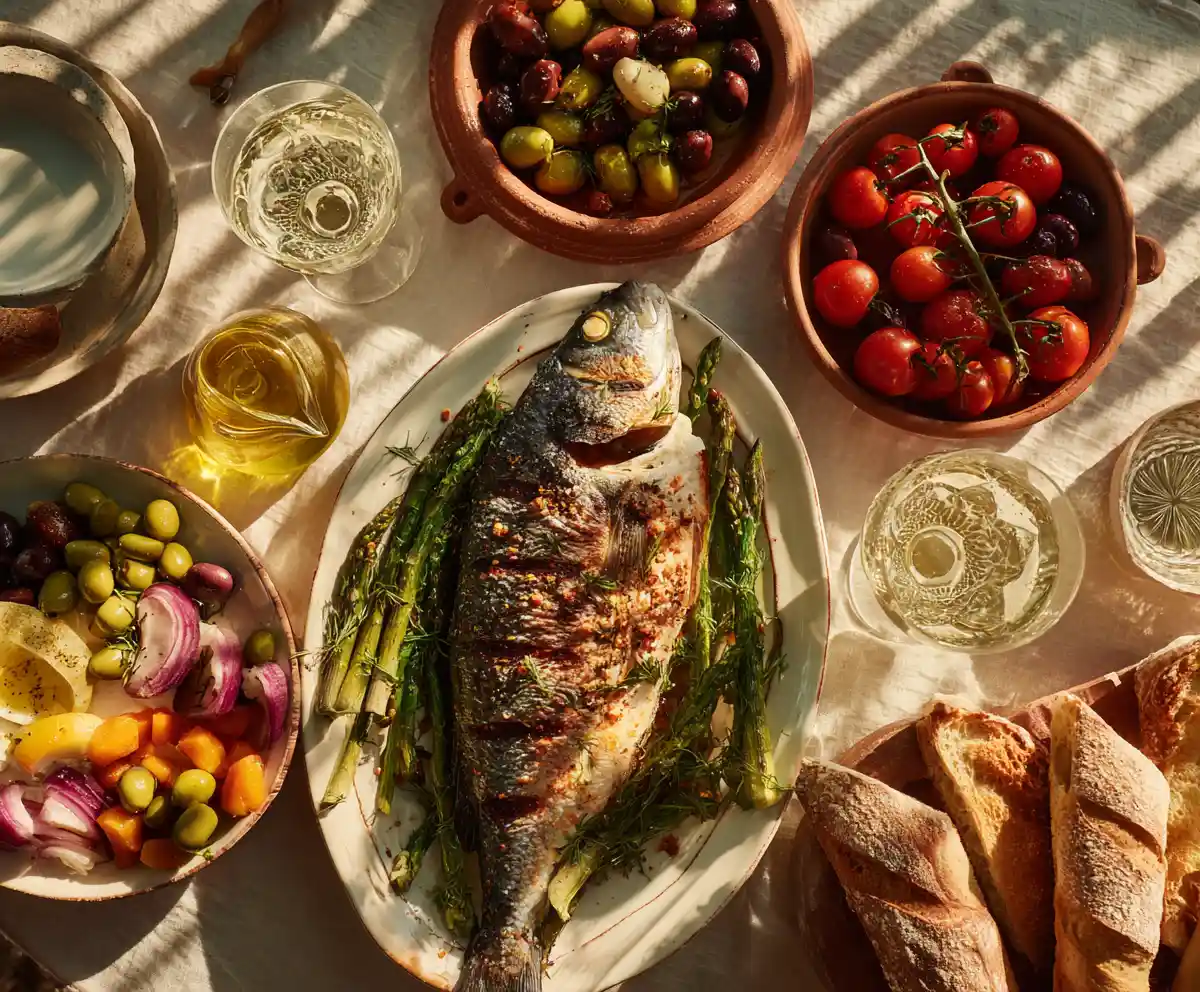
I watched this in my grandmother’s kitchen. She didn’t meal prep on Sundays or track macros. She just lived a certain way. Every single day.
Her mornings started slow. Coffee. Fresh bread with a drizzle of olive oil. Maybe some fruit from the market. She never rushed breakfast, even when she had a thousand things to do.
Lunch was the main event. Always cooked. Always shared. And always followed by a short rest. Not because she was tired, but because that’s what bodies need in the middle of the day.
Evenings? A walk through the neighborhood. Conversations with neighbors. Dinner lighter than lunch, but just as intentional.
Here’s what a Mediterranean day actually looks like:
| Time of Day | Mediterranean Habit | Why It Matters |
| Morning | Light breakfast, coffee, no rush | Sets a calm tone for the day |
| Midday | Main meal, eaten slowly with others | Supports digestion and connection |
| Afternoon | Short rest or quiet time | Reduces stress, boosts energy |
| Evening | Light meal, social time, walking | Aids sleep and strengthens relationships |
You don’t need to follow this exactly. But notice the pattern. Meals matter. Rest matters. People matter. Movement happens naturally, not as punishment.
Pro Tip: Start with one shift. Eat lunch away from your desk. Take a 15-minute walk after dinner. Rest for 10 minutes in the afternoon. Small changes create the Mediterranean diet food list foundation you need.
This is Mediterranean culture and food working together. Not as a diet. As a life.
The Mediterranean Approach to Food & Movement
Here’s what I love most about the Mediterranean way. Food and movement aren’t separate categories on a to-do list. They’re woven together into one natural rhythm.
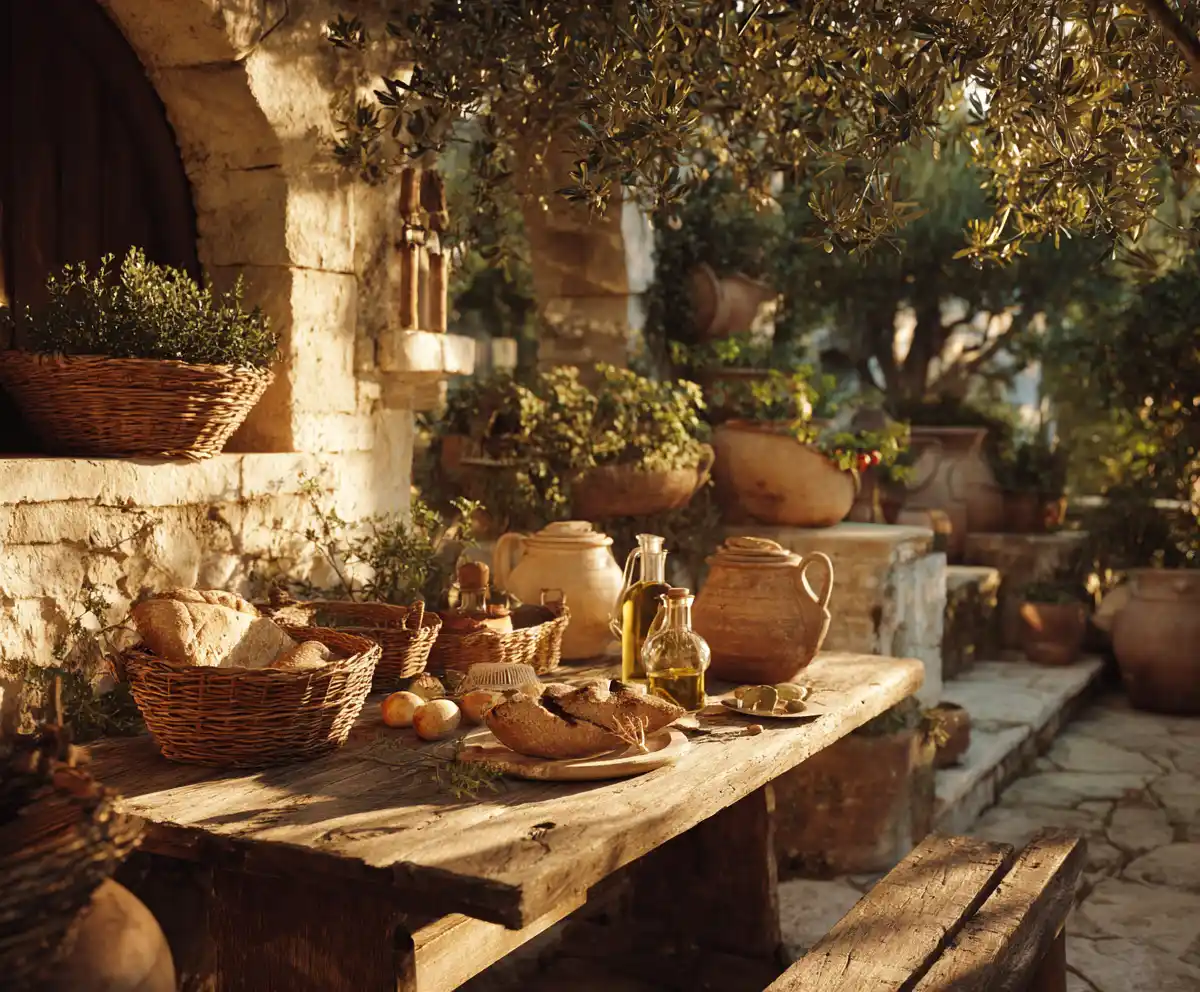
You don’t “earn” your meals with exercise. You don’t burn off pasta with guilt-fueled cardio.
Instead, you walk to the bakery to pick up fresh bread. You carry your groceries home from the market. You chop vegetables, knead dough, set the table. Your body moves because life asks it to, not because an app told you to.
This is what longevity habits actually look like. Not extreme. Not exhausting. Just consistent.
Here’s how movement happens naturally in the Mediterranean lifestyle:
- Walking everywhere. To the store, to a friend’s house, through the town square. It’s transportation and social time rolled into one.
- Working with your hands. Gardening, cooking, building, creating. Physical tasks that produce something meaningful.
- Playing and dancing. Movement for joy, not just fitness. Music, games, celebration.
- Staying active into old age. No retirement from life. Just gentler versions of the same activities you’ve always loved.
According to the Mayo Clinic, this approach to daily activity combined with whole, unprocessed foods creates one of the most sustainable patterns for long-term health.
And the food itself supports this. Meals aren’t heavy or complicated. Vegetables, legumes, whole grains, olive oil, fresh herbs. Foods that give you energy instead of weighing you down.
You eat to live well, and you move because living well asks you to.
That’s the Mediterranean health tips no one talks about. It’s not about discipline. It’s about designing a life where the healthy choice is also the easy one.
Mindset, Relationships, and Slow Living
The first thing I noticed after returning to Naples? Time moved differently. Not slower, exactly. Just more intentional.
People weren’t racing through their days. They were living them.
That shift in pace is what defines the Mediterranean mindset. And honestly, it might be the secret ingredient nobody talks about enough.
Slow living isn’t about being lazy or unproductive. It’s about valuing quality more than speed. Presence over checking boxes. Real moments over endless tasks.
Back in Tennessee, I was always behind. I ate lunch while answering emails. Rushed through conversations. Said yes to everything and enjoyed nothing.
Going back to my roots changed everything, gently and quietly, like finding my breath again.
Here’s how this mindset shows up in real life:
- Always make time for people. When a neighbor stops in, share a few minutes together. The work will still be there when you return.
- Treat meals like events. Food isn’t just calories. It’s conversation, comfort, and a chance to pause.
- Pay attention to the small joys around you. Gratitude is not something you seek, the smell of fresh basil, the laughter of a child, the warmth of the sun on your shoulders.
- Give yourself permission to rest. A midday break isn’t lazy,h It’s smart. Your brain and body need it.
- Go deep, not wide. Three close friends beat thirty acquaintances every time.
The Harvard Gazette points out something important. Strong relationships and lower stress levels protect your health just as much as eating well or staying active.
Quick Fact: Researchers studying Blue Zones (places where people regularly live past 100) found one consistent pattern. Daily social interaction and intentional downtime were non-negotiable habits.
That was my biggest revelation during my personal Mediterranean journey. True wellness goes way beyond your plate. IIt’s about the way you choose to spend your time. Who you spend it with. Whether you give yourself room to actually enjoy your life.
No amount of kale will fix chronic loneliness. No productivity hack will cure burnout.
But slowing down? Showing up fully for people? Making space for simple pleasures?
That changes everything.
Slow living means doing fewer things with your whole heart instead of doing everything halfway.
How to Start Living the Mediterranean Way
You don’t need to move to Italy or throw out your entire pantry. Starting the Mediterranean way is simpler than you think.
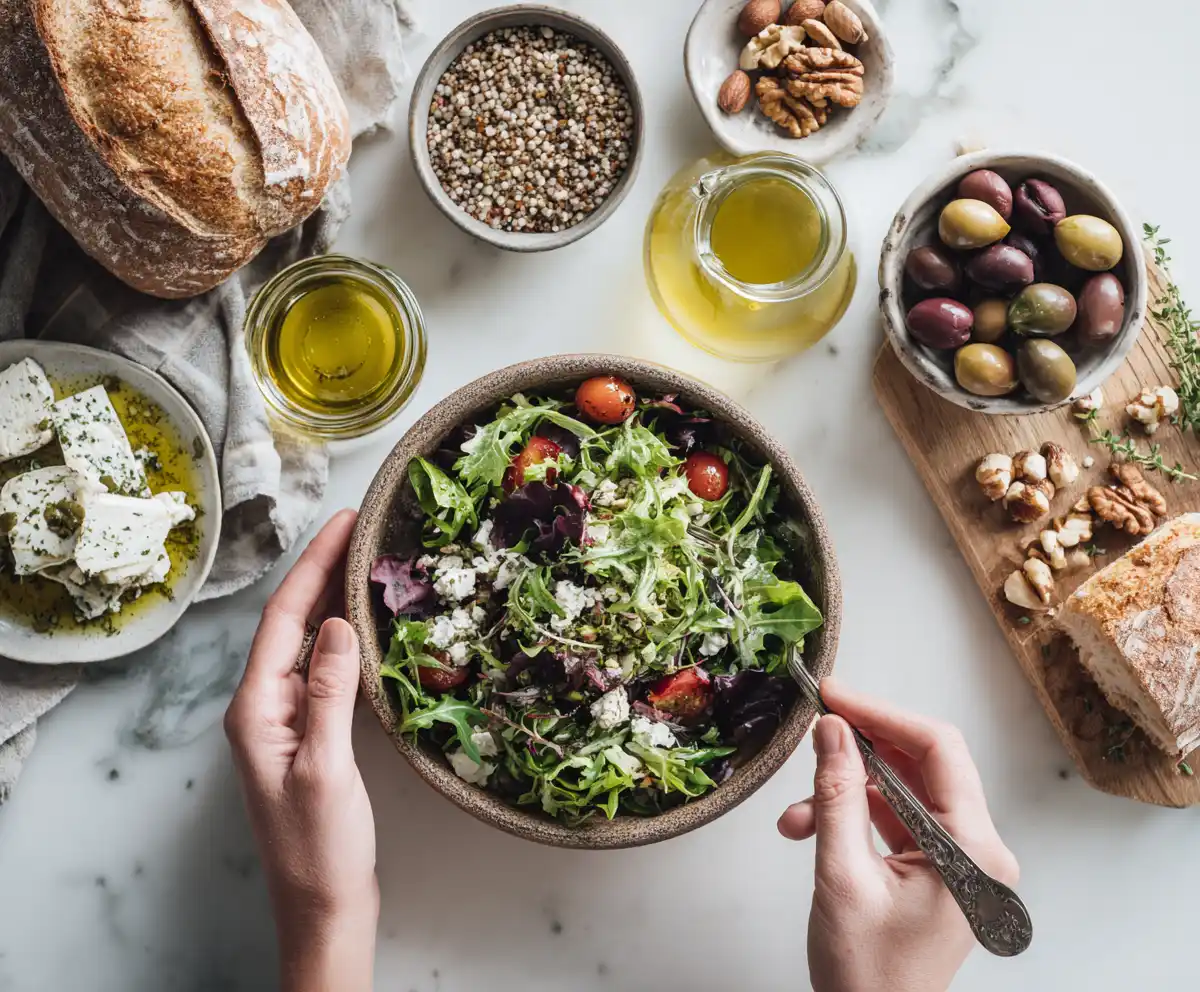
I get it. You’re busy. You have a job, a family, a life that doesn’t look anything like a village in Crete. That’s okay.
The beauty of this lifestyle is that it adapts to you. You don’t have to do everything at once. You just pick one small shift and let it grow.
Here’s how I recommend beginning:
Week 1: Start With Your Plate
- Swap one processed meal for a real one. Instead of frozen pizza, make a simple pasta with olive oil, garlic, and vegetables.
- Add one extra serving of vegetables daily. Roasted, raw, or sautéed. Just get them on your plate.
- Cook with olive oil instead of butter. Small swap, big impact over time.
Week 2: Change How You Eat
- Sit down for at least one meal a day. No phone. No TV. Just you and your food.
- Eat slower. Put your fork down between bites. Taste what you’re eating.
- Invite someone to join you. A family member. A friend. Even once a week makes a difference.
Week 3: Move Naturally
- Take a 15-minute walk after dinner. That’s it. Just walk.
- Do one physical task with your hands. Garden. Cook from scratch. Organize something. Movement that creates something feels different than a treadmill.
Pro Tip: Don’t aim for perfection. Aim for consistency. Three Mediterranean meals a week beats zero. A 10-minute walk beats no walk. Progress, not perfection.
Here’s a simple comparison to help you see what shifts to make:
| Instead of This | Try This Instead |
| Eating at your desk | Sitting at a table, even for 10 minutes |
| Drive-thru breakfast | A piece of fruit and some nuts at home |
| Solo meals every night | One shared meal per week |
| Gym guilt | A daily walk you actually enjoy |
| Rushing through dinner | 20 minutes of slow, mindful eating |
The science backs this up too. Research shows that even partial adoption of Mediterranean habits improves cardiovascular health, cognitive function, and overall longevity.
You don’t have to be all-in from day one. You just have to start.
And if you want more guidance, check out the health benefits of the Mediterranean lifestyle to see exactly what you’re working toward.
Small steps. Real food. Good people. That’s how you live the Mediterranean way, no matter where you are.
Your mediterranean lifestyle guide Questions Answered
What is the difference between the Mediterranean diet and Mediterranean lifestyle?
The Mediterranean diet focuses on what you eat: olive oil, vegetables, whole grains, fish, and legumes. The Mediterranean lifestyle is bigger. It includes how you eat (slowly, with others), how you move (naturally, throughout the day), how you rest (without guilt), and how you connect (deeply, with community). The diet is one piece. The lifestyle is the full picture.
Can I follow the Mediterranean lifestyle if I don’t live near the coast?
Absolutely. I live in Tennessee, thousands of miles from the Mediterranean Sea, and I follow these habits every day. You don’t need beaches or warm weather. You need intention. Shop at your local farmer’s market instead of imported specialty stores. Walk in your neighborhood. Eat dinner with your family. The geography doesn’t matter. The habits do.
What are the most important Mediterranean lifestyle habits to start with?
Start with three things: eat real food (not processed), share at least one meal a day with someone you care about, and move your body naturally (walking counts). Those three habits form the foundation. Everything else builds from there. Don’t overwhelm yourself trying to change everything at once. Small, consistent shifts create lasting change.
Can the Mediterranean lifestyle help with weight loss?
Yes, but not in the way most diets work. You’re not counting calories or restricting food groups. You’re eating whole, satisfying foods. You’re moving more naturally. You’re reducing stress and sleeping better. Weight loss often happens as a side effect of living well, not as the main goal. And because this isn’t a restrictive diet, the changes actually stick. You’re building a sustainable way of life, not following a temporary plan.
Bringing It Home
You’ve made it this far. That tells me something about you.
You’re not looking for another quick fix or 30-day challenge. You want something real. Something that lasts. Something that actually feels good.
That’s exactly what the Mediterranean lifestyle offers.
It’s not about perfection. It’s not about following every rule or doing everything right. It’s about remembering what matters. Good food. Real connection. Natural movement. Time to rest. Time to enjoy.
I started this journey in my grandmother’s kitchen in Naples. I lost it in Tennessee. And I found it again when I stopped chasing wellness and started living it.
You can do the same. Right where you are. With what you already have.
Start small. Cook one real meal this week. Take a walk after dinner. Sit down to eat without your phone. Invite someone over. Rest without apologizing for it.
These aren’t small things. They’re everything.
The Mediterranean way isn’t a destination you arrive at. It’s a rhythm you build, one choice at a time. And every single choice brings you closer to feeling like yourself again.
If you’re ready to dive deeper, I’d love to guide you. Learn more about Elena Janice and why I’m so passionate about sharing this lifestyle with you.
Ready to start your Mediterranean journey? Explore my beginner’s guide to the Mediterranean diet and take the first step today.
Welcome home.